I always carried that notion with me that I could learn from all types of people. I don't know if she had studied the theories of Lev Vygotsky when she was earning her master's in education but I later read about his concept of the More Knowledgeable Other (MKO) and I immediately recognized the way I have always learned in it. I have no problem saying I don't know and seeking out ways to find out. For those not familiar with the idea of the MKO, it is anyone who has a better understanding or a higher ability level than the learner, particularly in regards to a specific task, concept or process. Traditionally the MKO is thought of as a teacher or an older adult; however, this it can be a peer, sibling, a younger person, or even a computer. The key to MKO is simply that they have more knowledge about the topic being learned than the learner does. And since no one can be an expert in everything, we all need many MKOs.
One of the very first emails I ever sent, back in the screeching-modem-connected-to-a-phone-line days was to a professor literally half way around the world. I was working on a writing project about trees and had found some vague references about a language that was spoken by aboriginal tribes in Malaysia only when they were out harvesting camphor. Yeah, it was a pretty obscure topic. But I had a specific question about whether the language was still in use or if this was a language that had faded into obscurity, much as I sort of expected my question to do. But I found a professor in Singapore and figured, what's the worst that can happen. He ignores me? So I sent him a message and then headed off to work. At the time I was working evenings as a proofreader, which was early morning for the professor. By the time I got home I had a reply. I was beyond shocked. He not only answered the question but gave me the name of another professor who might have even more knowledge of the subject.
Of course, I'm not the only one to discover the amazing things that can happen when you click Send. Bernard Bull shares his own email moment. Results may vary but I have recently encountered others who had similar tales. In his book The Art of Self-Directed Learning, Blake Boles tells the story of a 15-year-old middle-school dropout with a love of chemistry. The young man emailed a professor and said: "Hi, my name is Jonah. I'm 15; I'm really interested in chemistry, and I'd like to sit in on your class. Would that be okay?" He not only got the chance to go to the class but got a letter of recommendation from the professor. Another is Leah K Stewart, whose site I learned of through Global Collaboration Day. I am just getting acquainted with her work, but in a video I watched she passionately proclaims the successes she has had by reaching out to others in her field and building mutually respectful mentoring friendships.
Once you have gotten the hang of making these learning connections, maybe it is time to move onto creating, as mentioned in the video, an advisory board. Oooh, that sounds formal, you say. Well, your learning and success is something that you should take seriously and approach with some degree of planning and purposefulness. Again, the video jogged my memory of other sources on the subject that perhaps some of you may find of use as well.
Career coach Joy Chudacoff's book What's Next: The 7 steps to discover your big idea and create a wildly successful business was one of the sources I recalled as I listened to the section on creating your own advisory board. She recommends a Board of Advisors who provide a fuel support system that will help you create your spark. These people will encourage and mentor, provide wisdom both of maturity and youth–in other words they will provide different perspectives. Have people from different areas of expertise and backgrounds, older and younger, those who have been there and done that and those who haven't. These are probably not people from your mutual admiration society like friends and family who may not be best situated to push you out or your (and their) comfort zone. It should be people with positive but honest opinions. It is not about creating an echo chamber. Another source you might want to check out about career enhancing advisory boards is this article by Chris Brogan.
Finally, one of my favorite articles on the topic of personal boards is from almost 2 decades ago. The title, Looking Out for Number One, may not imply the reciprocal relationship that Jim Collins goes on to describe, but it does support the notion of self-directedness, self-awareness, and self-actualization so crucial to anyone's success. Among the nuggets of wisdom in his piece are the following:

Once you have gotten the hang of making these learning connections, maybe it is time to move onto creating, as mentioned in the video, an advisory board. Oooh, that sounds formal, you say. Well, your learning and success is something that you should take seriously and approach with some degree of planning and purposefulness. Again, the video jogged my memory of other sources on the subject that perhaps some of you may find of use as well.
Career coach Joy Chudacoff's book What's Next: The 7 steps to discover your big idea and create a wildly successful business was one of the sources I recalled as I listened to the section on creating your own advisory board. She recommends a Board of Advisors who provide a fuel support system that will help you create your spark. These people will encourage and mentor, provide wisdom both of maturity and youth–in other words they will provide different perspectives. Have people from different areas of expertise and backgrounds, older and younger, those who have been there and done that and those who haven't. These are probably not people from your mutual admiration society like friends and family who may not be best situated to push you out or your (and their) comfort zone. It should be people with positive but honest opinions. It is not about creating an echo chamber. Another source you might want to check out about career enhancing advisory boards is this article by Chris Brogan.
Finally, one of my favorite articles on the topic of personal boards is from almost 2 decades ago. The title, Looking Out for Number One, may not imply the reciprocal relationship that Jim Collins goes on to describe, but it does support the notion of self-directedness, self-awareness, and self-actualization so crucial to anyone's success. Among the nuggets of wisdom in his piece are the following:
"Personal-board members from outside your profession or industry can help you overcome the limitations of conventional wisdom and remain true to your goals.
Look for board members who, while strong in their views, are nonjudgmental and compassionate. The best board members dispense wisdom like Socrates—by asking questions, drawing analogies, and making dispassionate observations.
The best payment is simply to emulate them by giving time and guidance to others, especially younger people who need mentors. Additionally, most personal-board members appreciate being kept informed of your progress. In fact, it's good discipline to write a letter once a year or so to your board. That personal "annual report" not only keeps your board informed but also helps you clarify your own thinking and take stock of how you're doing."
Before I conclude for today I will point you to two other examples of how being connected to others can bring about amazing results. I first wrote about these two people a few years ago when I was first becoming an advocate of self-directed learning as part of a graduate school project I called Learn, Rinse, Repeat: Where the learning never stops. The post was entitled "So does it work? Spoiler: Yes!"
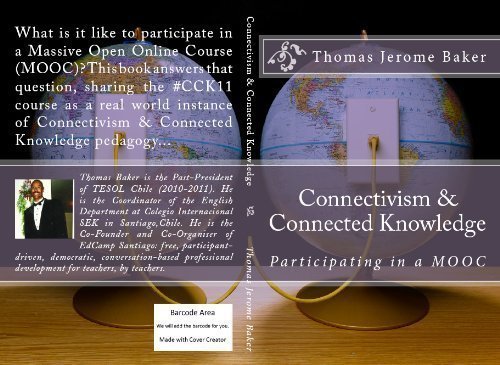
The first example was Thomas Jerome Baker who wrote Connectivism & Connected Knowledge: Participating in a MOOC. The reason I mention him again was that even when he wasn't actively communicating with others from the MOOC he was writing about he frequently used mock interviews to help himself talk through his learning journey. He also wrote letters that I said "could almost be considered love letters with the subject of admiration being both his correspondents and learning." Sometimes reflecting happens when we bounce ideas off of another person and sometimes when we practice speaking those ideas to ourselves in the mirror.
The other person that the Thousand Tutor video reminded me of was the following video entitled American Polyglot Practicing 20 Languages. Learning languages is a perfect example of a skill that requires other people. Sure you can use recordings and such but ultimately language is meant to be spoken (unless you do what I did in school and stick with taking lots of Latin, lol). The point is that, aside from the video showing a really amazing young man, he explains how he learned the various languages. Some from classes and books, but also movies, and an entire network of friends he amassed locally and globally that he can connect with via Skype.


